AD Jim Smith on college landscape, state of NIL, where Maryland's programs stand ahead of 2026
Jim Smith joined the Big Ten Network earlier this summer with the episode released on Wednesday, exactly one year after he officially began his new position as the new athletic director at the University of Maryland. Smith dove into the state of college athletics, the revenue programs, how NIL for non-rev sports is working and plenty more:
On the changing landscape across college athletics
“Well, I think when I came back, I expected change in a very different Big Ten, but then it just continues to change and evolve. And I think that's been the biggest learning, is that you just have to be ready for the unexpected. And [Big Ten commissioner Tony Petitti] has been great from a leader trying to give us some continuity and some guidance in how we operate at a really high level. And you can see the conference continues to operate at a really high level despite the uncertainty in the system.”
On adjusting to the changes in College Park
“You have to make the decision with the best information you have at the time and then just go with it until time changes again, and then you adjust from there. And I think that ambiguity or constant change can throw some people off in a system that was very stable for a really long period of time. But when you come from perhaps the outside, maybe that is one of the advantages of coming from the pro sports side, is that you are very adaptable and that you're always trying to evolve and be the best, rather than be in a system that's constant and that is predictable.”
How financially sustainable the current system is
“Sustainable is - I think you have to define what sustainable is. Is it one year, three years, five years? It's sustainable for a period of time because we can see teams respond, schools responding to the constant change with no difference, or maybe even adding more to it. So I can't say we're at the unsustainable point today, but it doesn't feel like it's a really solid system to build on for the long term. So that would make it unsustainable at some point in time, but I don't know when that's going to be and I don't know that anybody knows when that's going to be.”
What Jim Smith applies from his pro sports experience to Maryland
“I'll start with the athlete side is the same on both. These are elite athletes, whether they're collegiate elite athletes or professional elite athletes and they have a way that you want to treat them to where they can compete at the absolute highest level. And so that piece is consistent on both sides, and that's true whether it's football or field hockey. These athletes want to be treated really well, have the resources to be able to compete while all getting an education. And it's really pretty special to be a part of that. And from a biggest difference standpoint, I think it's just we're evolving the business model in college athletics and so bringing some of those experiences from the pro side into the college side, I think can be really beneficial. And it's a good conversation with my colleagues to see what is reality in the collegiate world and what might be a little bit more fantasy for what we can get done in the collegiate world.”
How the rev share effect student athletes
“The headlines are about the big numbers in football and basketball, but the reality is when you get to the Olympic sports, those opportunities exist. They just exist in a different format, and maybe with a different amount tied to it. And that's the great part about what NIL provides for student athletes in our Olympic sports is that they can truly monetize their brands and they can take advantage of those things that maybe they weren't allowed to in the past. And it gives them an incentive that if they're interested to really be able to capitalize on it. And if they're not interested in it, they're going to get a great education, compete at the absolute highest level, and be prepared for what's post-Maryland.”
Year eight for Mike Locksley
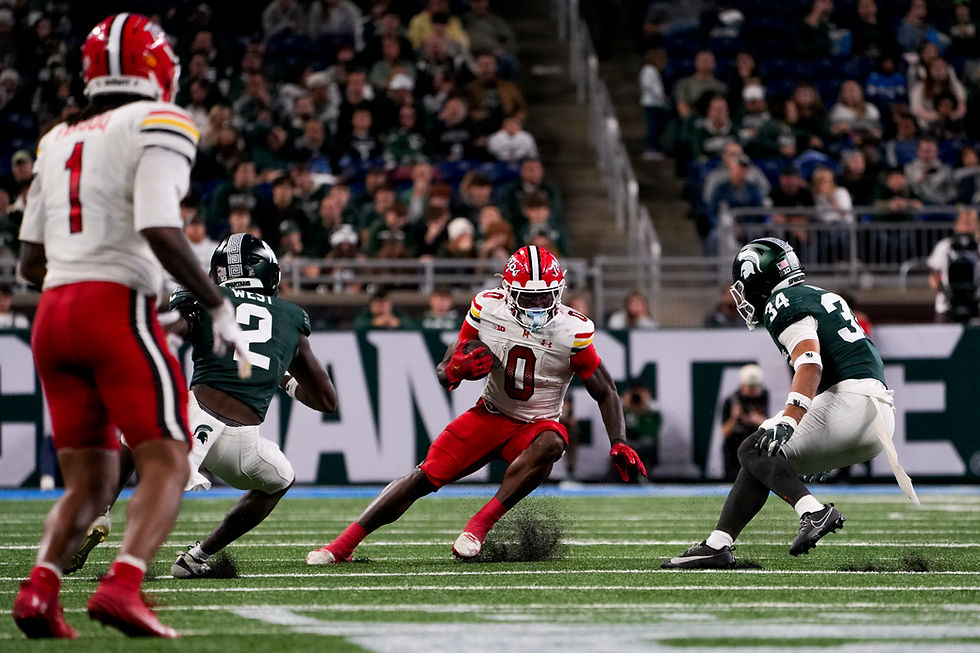
“I think you saw a big change in this offseason by retaining 20 of our…real important players, they weren't all starters, but very important players to stay and play for Coach Locksley and stay at Maryland. And I think resources, added resources, helped accomplish that. Really keeping a core together was really important in this off-season, and really focusing on our DMV players, right? And not just in football, but in all our sports and I think that was kind of the message we wanted to send. Hey, we want to keep our best at home. We want them to play at Maryland. Coach Locks has got a lot to work with this year. We're excited about it, about where we think the program is going to go this year, and to build on a really young roster last year with a true freshman quarterback. We don't see too many 18-year-old quarterbacks starting in college football anymore and having a pretty good year as an 18-year-old. Really excited to see what Malik can have in this upcoming year with one full year of Big Ten football under his belt.”
Assessing year one under Buzz Williams
“You look at the whole body, the entire year, and you say Coach Williams started with 19 days into the portal when he joined Maryland. Right, so he was 19 days behind putting a roster together from scratch, and he put a pretty good roster together, and then hit some injuries. It was just a constant obstacle throughout the season that they continued to overcome. And what you really saw at the end of the year was a team that continued to play really hard, really hard. And win some games at the end of the year after going through a lot of adversity through the entire season. It tells you a little bit about the coaching staff that they didn't stop coaching, they didn't stop working, the players didn't stop playing, and then we went into the offseason and made some pretty significant adjustments to the roster. We're going to get Pharrell Payne back. He was the linchpin to the team and when he went down, it was really going to be a really hard season and it was. So we're really excited about the new tools we have coming in, the new players that we'll have on the court and really excited to see what happens this upcoming year.”
On Brenda Frese, women’s basketball
“Brenda is an elite basketball coach. She has had tremendous success her entire time at Maryland and she's great to work with. And she has evolved quickly to this new dynamic and I think that's a real credit to her how she's built a program and then just continued to get the small differences in what's going on in this basketball world today, and continue to be really successful. And to coach at a really high level, develop young women into great student athletes, great professionals, and to hear her NCAA championship team talk about their experience together is really incredible. And one day, if you haven't already done that feature, you have to do that feature. It's awesome to hear that.”
On how Kathy Reese, John Tillman, and Sasho Cirovski serve as measuring steak for rest of UMD Athletics
“Add Missy Meharg, our field hockey coach and Brenda. When you look around that coach's table, there's an incredible amount of success. National championships all sitting around that table. I don't know, maybe all the other programs have that, but when you walk in and see national championship coaches sitting around the table with some of our younger coaches and our up-and-coming coaches, it's really special. It's special because they have great historical context. They understand how to operate at a really high level at Maryland and they want to continue to be champions. When they still have that drive to be successful, it's really fun to be around them.”
On the state of the baseball program
“Baseball and softball, both very important at Maryland. Coach Swope, have a lot of confidence in him and his ability to be able to put the put the program back on the right track. We aren't in a pitcher-friendly ballpark. We're going to make some adjustments in this off-season that will allow us to be able to recruit a little bit better in the pitching category because we're in a lot of games. We can hit, we can score runs. I feel really good about that. We've got to get just a little better, a little deeper in our pitching rotation, and I think we'll be able to do that. We'll be able to become a little bit more of a destination for baseball players and we'll be able to compete with our peers in the Big Ten.”
Related Links
Follow us on Facebook
Follow us on Twitter
Follow us on Instagram
Follow us on YouTube